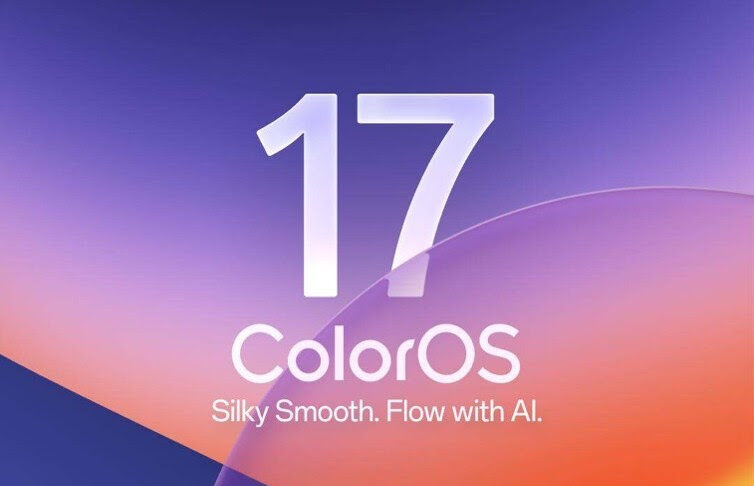
OnePlus Unveils ColorOS 17 with AI Features, Performance Upgrades; OnePlus 15 to Get It in Q4 2026
Bengaluru, India, October 13, 2026: OnePlus has announced ColorOS 17, the latest generation of its mobile operating system, introducing a redesigned user interface, improved system responsiveness and a broader range of artificial intelligence (AI) capabilities.
The new software will debut on the OnePlus 15 in the fourth quarter of 2026, with a progressive rollout planned for additional OnePlus devices.
As part of a change to its software strategy, OnePlus has also announced a transition from OxygenOS to ColorOS. The company said the move is intended to streamline software development, accelerate update cycles, improve software quality and make better use of shared engineering and research and development resources.
ColorOS 17 introduces a new Living Flow Design, an updated rendering architecture, an intelligent resource scheduling system and several AI-powered features designed to help users manage files, edit photographs, organise information and access contextual services.
ColorOS 17 Introduces Living Flow Design
One of the biggest changes in ColorOS 17 is the introduction of Living Flow Design, which aims to make the interface feel more fluid, responsive and intuitive.
The design language is built around three elements: Luminous Effect, Fluid Motion and Flexible Feedback.
Luminous Effect introduces softer, translucent visuals, improved depth and subtle lighting that responds to touch. Fluid Motion focuses on smoother transitions, allowing interface elements to move and transform more naturally between different states. Flexible Feedback adds visual responses to touch interactions, with buttons, toolbars and other interface elements compressing and rebounding when tapped.
Together, these changes are designed to create a consistent experience across app transitions, Fluid Cloud and everyday system interactions.
OnePlus Claims Up to 30% Lower Rendering Load
ColorOS 17 introduces a Unified Rendering Architecture powered by an updated Luminous Rendering Engine. The new architecture brings previously separate rendering processes into a unified pipeline, aiming to improve visual consistency while reducing processing overhead.
According to OnePlus, the system reduces rendering workloads by up to 30% and RAM usage for rendering by up to 25% in key scenarios compared with the previous generation.
The operating system also features an upgraded Laminar Flow Engine, an intelligent resource scheduling system built on OnePlus’ Adaptive Scheduling Architecture. It coordinates foreground and background workloads to maintain responsive performance during everyday use and demanding tasks.
OnePlus claims that ColorOS 17 improves app launch stability by 55%, while Gallery thumbnails load up to 50% faster on the first launch compared with ColorOS 16.
The company also says the operating system can keep more than 25% additional apps running in the background, helping users switch between applications with fewer interruptions.
In tests simulating six years of use, ColorOS 17 reportedly retains more than 90% of its initial smoothness, even when device storage is 90% full. These are manufacturer-reported results, and actual performance may vary depending on the device and usage patterns.
ColorOS 17 Expands OnePlus AI with Agent Mode
OnePlus is expanding its AI capabilities with system-level features designed to carry out multi-step tasks rather than simply respond to questions.
A key addition is AI Mind Pilot with a new Agent Mode, which can work with photographs and files stored on a device, search across multiple sources and coordinate tasks using appropriate tools.
The feature can locate and organise scattered files, rename them based on their content and dates, and use information from those files to generate outputs such as travel itineraries and webpages.
For photographs, Agent Mode can find images from a particular trip, sort them into albums and adapt selected pictures for creative uses, including vlog covers.
These capabilities are designed to reduce the manual effort involved in organising digital content and completing tasks across different files.
AI Photo Agent Brings Natural-Language Photo Editing
ColorOS 17 also introduces AI Photo Agent, which aims to simplify photo editing while retaining the natural appearance of the original scene.
Its Style Match feature allows users to provide a reference image. The AI then analyses the image’s colour palette, tone and overall mood before applying a similar look to another photograph.
Users can also describe the edits they want in natural language. Alternatively, AI Photo Agent can analyse an image and recommend adjustments based on its subject and scene.
The feature is intended to make creative editing more accessible without requiring users to navigate multiple editing tools or manually adjust individual parameters.
AI Mind Space and AI Mind Suggest Get Upgrades
OnePlus has upgraded AI Mind Space, its personal information hub, with features designed to turn saved content into structured and searchable information.
Users can save documents and video links, with AI identifying their content and organising them into personal memories. A new Memory Collections feature automatically groups related information into collections and summaries.
For travel planning, AI Mind Space can combine saved information with destination maps to generate personalised itineraries based on places, ideas and content previously collected by the user.
Another addition, AI Mind Suggest, is designed to surface relevant information and services based on the user’s activities and needs.
Its capabilities include morning briefings, travel reminders, flight and train information cards, and music recommendations when headphones are connected. The aim is to make useful information available without requiring users to search for it manually.
OSee Combines OnePlus’ Visual AI Tools
ColorOS 17 introduces OSee, which brings together several visual AI capabilities in a single interface.
Users can point the camera at an object or scene, allowing OSee to recognise what is in view and surface relevant services. These include object recognition, information searches, nutrition analysis, high-definition scanning and translation.
By combining these functions, OnePlus aims to reduce the need to switch between separate applications for different visual tasks.
ColorOS 17 Strengthens Privacy and Security
OnePlus says privacy and data protection remain central to its AI strategy in ColorOS 17.
The operating system uses the company’s Private Computing Cloud for cloud-based AI processing, with end-to-end encryption and a secure processing environment designed to prevent unauthorised access to user data, including access by OnePlus itself.
ColorOS 17 also introduces post-quantum security capabilities for Private Computing Cloud data transmission. A dual-encryption mechanism is designed to strengthen protection for information transferred between devices and the cloud against emerging threats associated with quantum computing.
A new Transparency Report gives users greater visibility into AI activity on their devices. It provides information about the AI services used, when they were accessed and the operations performed. Users can view the report on their device and export it when required.
Another new feature, AI Call Guard, uses on-device AI detection to monitor calls in real time for potential fraud indicators, including synthetic voices and AI-generated face swaps. The system is designed to alert users when suspicious activity is detected.
ColorOS 17 Availability and Rollout
ColorOS 17 will debut on the OnePlus 15 in Q4 2026, with updates planned for additional OnePlus devices through a phased rollout.
OnePlus has not specified the complete list of eligible devices or detailed rollout dates in its announcement.
The transition from OxygenOS to ColorOS represents a significant change in the company’s software direction. With a redesigned interface, performance improvements, expanded AI tools and additional security features, ColorOS 17 is intended to deliver a more integrated software experience across the OnePlus ecosystem.
Share this content:









Post Comment