McLaren Heads to Madrid for New Madring Challenge as Formula 1 Returns to Spain
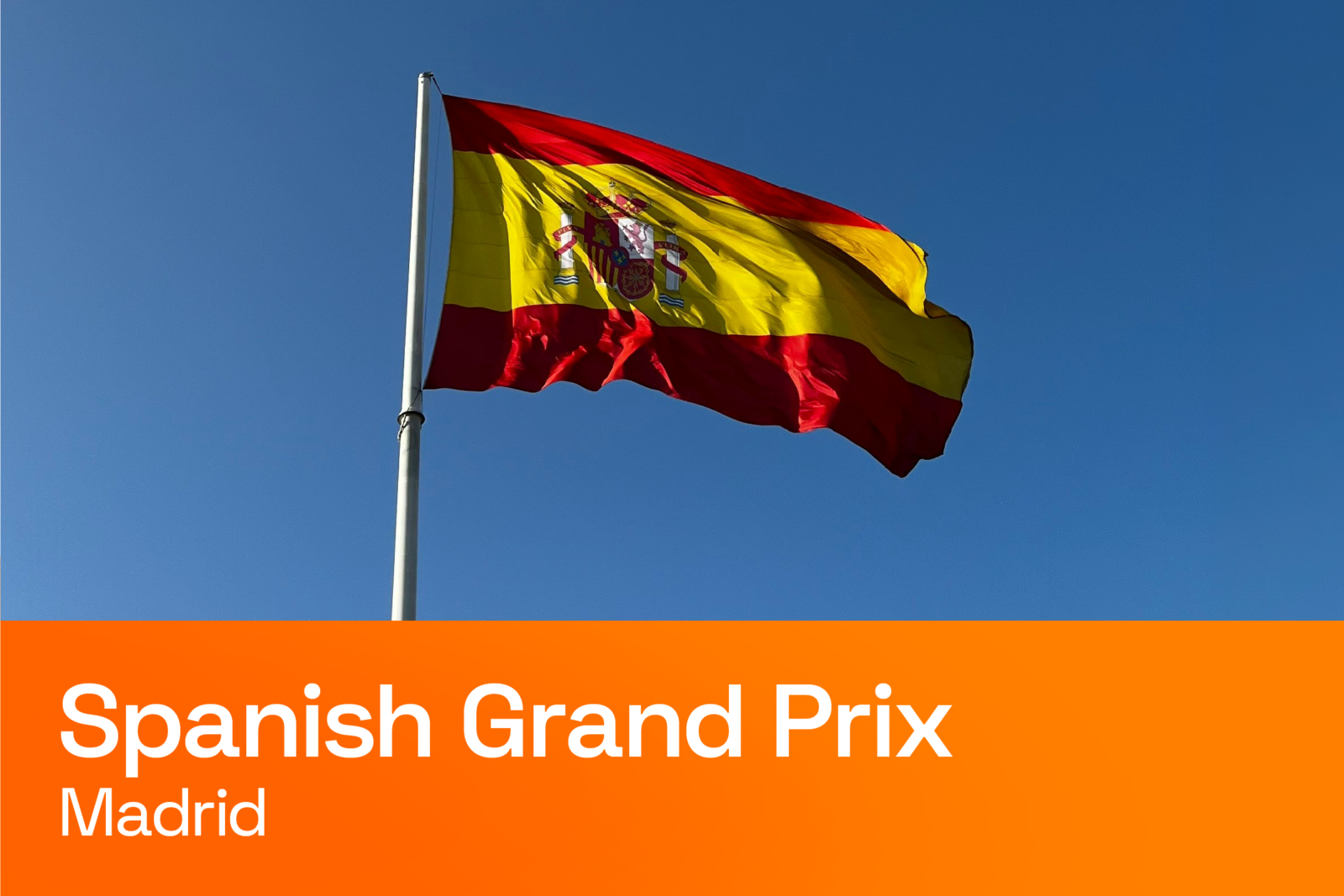
Madrid, Spain, September 9, 2026: Formula 1 returns to Madrid for the first time since 1981 this weekend, with the McLaren Mastercard Formula 1 Team preparing for a completely new challenge at the brand-new Madring street circuit.
The return of Formula 1 to Madrid presents teams and drivers with an unusual test, as there is no previous race data available from the new circuit. As a result, the opening practice sessions will be particularly important, with teams needing to quickly understand track characteristics, tyre behaviour and the demands placed on their cars.
For McLaren, preparation for the Madrid Grand Prix has included extensive simulator work. The team has used simulation to establish an initial direction for car set-up while allowing Lando Norris and Oscar Piastri to familiarise themselves with the new circuit layout.
However, the true characteristics of the Madring will only become clear once the MCL40 takes to the track.
McLaren faces new Madring challenge
McLaren expects several unknowns to play a major role during the inaugural Madrid Formula 1 weekend, including track grip, tyre behaviour, energy deployment, overtaking opportunities and how the circuit evolves as more rubber is laid down.
That puts a premium on adaptability and the ability to learn quickly throughout the weekend.
The McLaren Mastercard Formula 1 Team will focus on correlating its simulator data with real-world track conditions, completing its planned programmes efficiently and responding quickly as more information becomes available.
The team will also introduce slight aerodynamic updates to the MCL40 for the Madrid weekend. However, the H-Wing that debuted at Monza will not be used at the new circuit.
With the leading teams having remained closely matched during recent races, McLaren arrives in Madrid targeting a place among the top three.
The team wants to maximise every practice session, qualify strongly and give Norris and Piastri confidence in their cars before Sunday’s race.
Mark Temple highlights tyre behaviour as key factor
McLaren Technical Director, Performance, Mark Temple, believes understanding the behaviour of the tyres on the new Madrid asphalt will be one of the most important factors during Friday practice.
“Heading into a completely new circuit in Madrid brings both immense opportunity and risk,” Temple said.
He explained that while McLaren has solid simulation data covering the track layout, energy deployment and aerodynamic requirements, tyre behaviour remains one of the biggest unknowns.
According to Temple, determining the level of grip and understanding the surface conditions during Friday practice will be crucial to shaping the team’s approach for the remainder of the weekend.
The Madring itself is expected to provide a demanding test, with Temple highlighting the importance of braking stability, particularly while cornering, as well as precise kerb-riding through the slower sections.
The circuit also features several high-speed corners that will add another dimension to the set-up challenge.
Temple added that McLaren’s aerodynamic and mechanical development programme continues to make incremental progress, although the margins between the leading teams remain small.
“New venues reward the teams that adapt fastest,” Temple said, with McLaren’s objective being to build confidence and performance progressively through every session before delivering its strongest possible result on Sunday.
McLaren’s Spanish Grand Prix record
McLaren has a strong history in Spain, with the team having recorded nine wins, 10 poles, 30 podiums and nine fastest laps in the Spanish Grand Prix.
The team’s most recent Spanish Grand Prix victory came in 2025, when Oscar Piastri won in the McLaren MCL39.
McLaren’s history in Spain also includes a memorable victory by John Watson in 1981, the last time Formula 1 raced in Madrid before the championship’s return to the Spanish capital.
The team’s Spanish racing heritage also includes the 1997 European Grand Prix at Jerez, where Mika Häkkinen claimed his maiden Formula 1 victory.
Mika Häkkinen’s 1997 Jerez fairytale
The 1997 season finale was originally scheduled to take place at Portugal’s Estoril circuit. However, after requested track changes were not completed, the final race was moved to the Circuito de Jerez in Andalucia and held under the title of the European Grand Prix.
The Drivers’ Championship was still undecided heading into the race, with Ferrari’s Michael Schumacher holding a one-point advantage over Williams driver Jacques Villeneuve.
The race produced one of the defining moments of the season when Schumacher and Villeneuve collided after the Williams driver attempted to pass the Ferrari at the Dry Sac corner.
Schumacher retired and was subsequently disqualified from the entire 1997 season for his actions, while Villeneuve continued.
The incident opened the door for the McLaren drivers.
Mika Häkkinen and David Coulthard, driving the McLaren MP4/12, closed rapidly on Villeneuve during the closing stages. The McLarens eventually passed the Williams on the final lap, with Villeneuve allowing them through.
Häkkinen therefore secured his first Formula 1 victory, while Coulthard finished second to give McLaren a memorable 1-2 finish.
For McLaren, the result was a major confidence boost heading into the 1998 season.
Mark Ingham, who was Design Team Leader for the Engine Systems Group at the time, recalled the significance of the result and the atmosphere within the team.
The victory was particularly important for Häkkinen, who had endured considerable frustration before finally becoming a Grand Prix winner.
Häkkinen later reflected that winning the final race of 1997 gave him confidence throughout the winter ahead of the 1998 season.
That confidence proved significant as Häkkinen went on to win the 1998 Formula 1 World Championship.
McLaren targets strong start to Madrid Grand Prix weekend
The inaugural Madrid Grand Prix will therefore provide McLaren with a very different challenge from the team’s previous experiences in Spain.
With no historical race data from the Madring, the team will need to establish its baseline from scratch, while Norris and Piastri will have to quickly find the limits of the new street circuit.
Simulator preparation will provide an important starting point, but real-world grip, tyre performance and circuit evolution are likely to shape the competitive order as the weekend progresses.
With the leading teams closely matched, McLaren’s ability to learn and adapt quickly at the Madring could prove decisive.
The team’s immediate objective is clear: maximise every session, extract the potential from the MCL40 and remain in contention for the podium positions when the inaugural Madrid Grand Prix reaches its conclusion on Sunday.
Share this content:






Post Comment