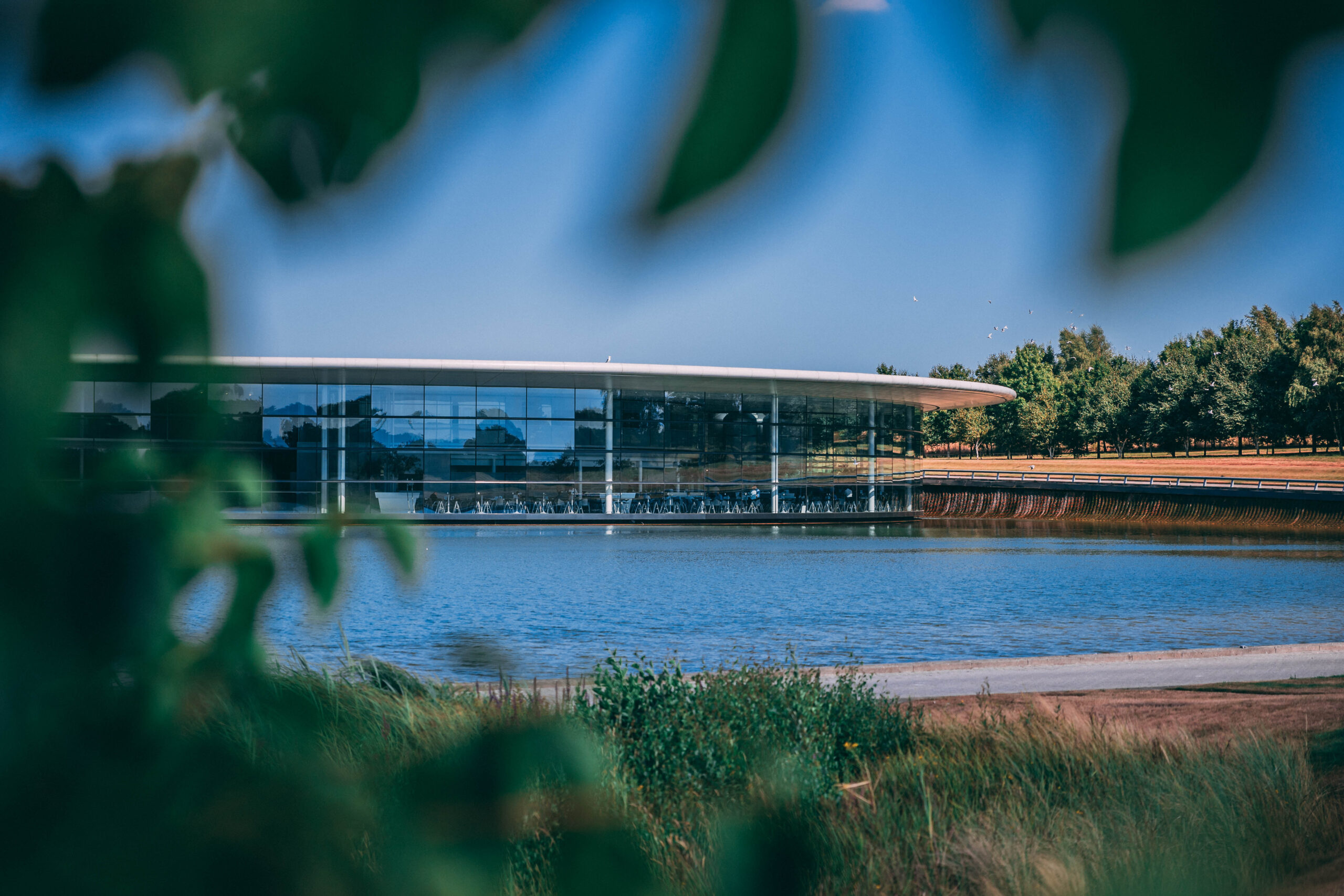
McLaren Racing Unveils 2025 Sustainability Report with Coral Restoration Innovation and Circular F1 Car Roadmap
Woking, England, May 28, 2026: McLaren Racing has released its 2025 Sustainability Report, highlighting major progress in reducing environmental impact, accelerating climate innovation and advancing diversity initiatives across motorsport.
The report outlines McLaren Racing’s efforts to combine Formula 1 engineering expertise with sustainability-focused innovation, including the launch of a semi-autonomous coral restoration system, expanded investment in sustainable aviation fuel and the development of a long-term roadmap for building a fully circular Formula 1 car.
McLaren Launches OSCAR Coral Restoration System
One of the standout initiatives in the report is the launch of OSCAR (Operational System for Coral Assembly and Restoration), developed in partnership with the Great Barrier Reef Foundation.
The semi-autonomous robotic system is designed to accelerate coral reef restoration by dramatically reducing the time required to assemble coral cradles used in reef recovery programs.
Previously, each cradle took around 90 seconds to assemble manually. Using robotics and automation inspired by Formula 1 engineering processes, OSCAR reduces assembly time to just 10 seconds per device, enabling annual coral planting capacity to increase from 100,000 to more than one million corals per year.
The technology is currently being tested in Australia and could eventually be deployed in reef restoration projects globally.
Circular F1 Car Vision Gains Momentum
McLaren Racing also revealed progress on its ambitious “Circular F1 Car” initiative, developed alongside Deloitte and supported by data analytics capabilities from Google.
The team unveiled a new Circular Car Roadmap aimed at redesigning Formula 1 car development around sustainability principles, focusing on reducing waste, increasing reuse of materials and lowering environmental impact throughout the manufacturing process.
According to the report, McLaren maintained a 22% circularity score in the production of its F1 chassis during 2025 through the use of recycled metals, bio-derived materials and improved recycling systems.
Major Reduction in Emissions and Waste
McLaren Racing reported a 39% reduction in operational emissions compared to its baseline, driven by sustainable aviation fuel certificates (SAFc), biofuel usage, logistics optimisation and freight efficiency improvements.
The team also announced that 100% of business travel emissions and Formula 1 charter logistics are now covered through SAF certificate investments made in partnership with Ecolab, equivalent to 1.1 million US gallons of aviation fuel.
Waste reduction initiatives also showed strong progress, with total waste reduced by 14% and hazardous waste disposal in composites manufacturing falling 40% year-on-year.
Diversity and Inclusion Initiatives Expand
The sustainability report also highlighted McLaren Racing’s diversity and inclusion progress.
The team said 44.8% of new hires in 2025 came from underrepresented groups, increasing overall workforce representation to 36%, with a target of reaching 40% by 2030.
McLaren Racing expanded its Driver Development Programme by signing female drivers Ella Lloyd, Ella Stevens and Ella Häkkinen.
The team also became the only Formula 1 constructor to enter a second car into the all-female F1 Academy series for 2026.
Ella Lloyd was named 2025 F1 Academy Rookie of the Year after securing five podium finishes, including one race victory.
Leadership Commentary
Zak Brown said collaboration and innovation remain central to McLaren’s sustainability strategy.
“It’s fantastic to see our McLaren Accelerator team apply motorsport know-how to other industries to help supercharge processes and drive efficiencies,” Brown said.
Kim Wilson added that the company’s performance-driven culture has translated into measurable sustainability gains across operations.
McLaren Racing was also ranked among Sustainability Magazine’s top 75 most sustainable companies globally, becoming the only racing team featured within the top 200 rankings.
The report reinforces Formula 1’s broader push toward sustainability and showcases how motorsport technology is increasingly being adapted for environmental and social impact beyond the racetrack.
Share this content:





Post Comment