F1 Azerbaijan GP: Pirelli Reveals C3, C4 and C5 Tyre Strategy for Baku
Baku, Azerbaijan, September 22, 2026: The Formula 1 circus heads to Baku this weekend for the Azerbaijan Grand Prix, the next stop in the triple-header, with Pirelli expecting low grip, limited tyre degradation and potentially long stints around the high-speed street circuit.
The Baku City Circuit is 6.003 km long and features 20 corners, combining tight, technical sections around the historic Old City with long straights where F1 cars can reach extremely high speeds. The contrasting nature of the circuit makes tyre management, braking stability, traction and aerodynamic efficiency particularly important.
Several sections of the circuit have also been resurfaced ahead of this year’s Azerbaijan Grand Prix. The work has affected parts of Turns 2, 3 and 4, although Pirelli expects the limited resurfacing to have little impact on overall tyre behaviour.
Instead, the biggest change through the weekend is expected to come from track evolution. As more rubber is laid down on the relatively smooth asphalt, grip levels should progressively improve after the opening sessions.
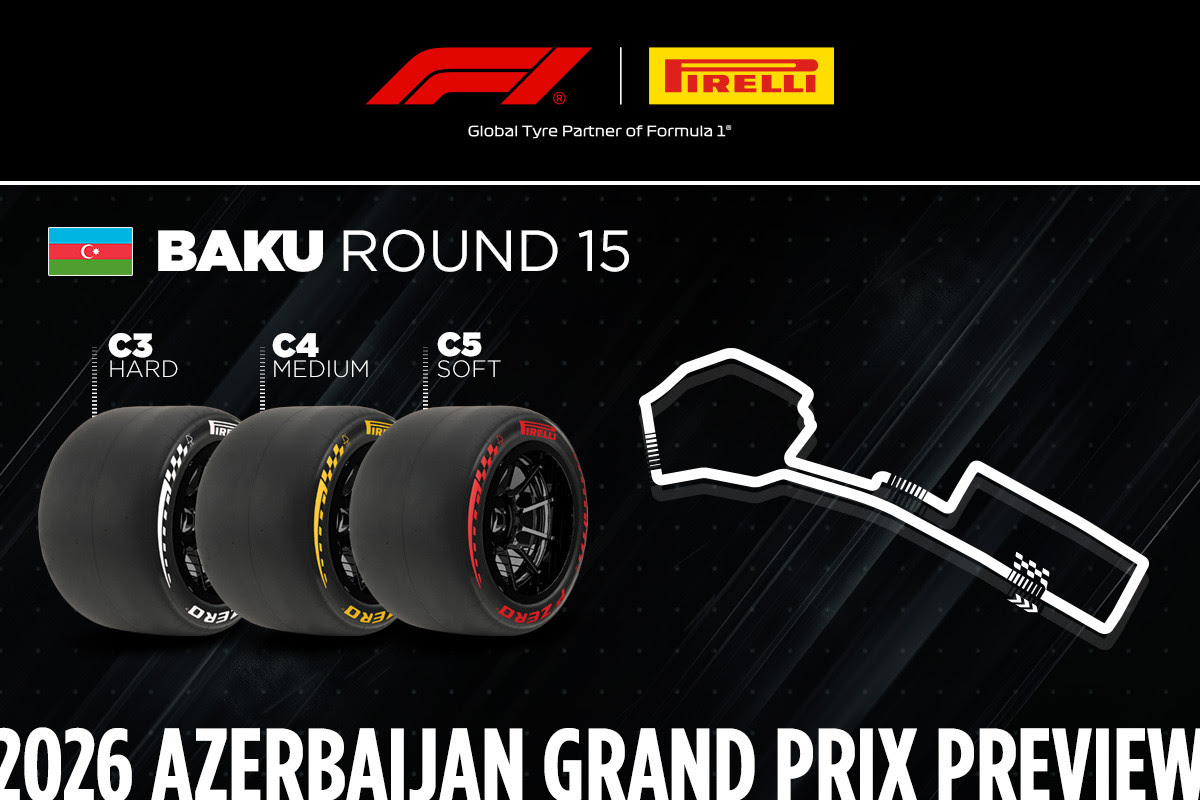
Pirelli selects C3, C4 and C5 compounds
Pirelli has selected its three softest compounds for the Baku weekend, with the C3 serving as the Hard, C4 as the Medium and C5 as the Soft tyre.
The selection is one step harder than last year’s range. In 2025, Pirelli brought the C4, C5 and C6 compounds, but the C6 Soft was not used during the race as drivers and teams favoured the C4 and C5 for longer stints and greater strategic flexibility.
This year’s choice could again favour teams looking to extend their opening stint, particularly given Baku’s relatively low tyre wear and degradation.
The race is expected to feature a one-stop strategy for most teams. The C5 Soft could be particularly useful for long runs, following its ability to deliver extended stints at Monza, another circuit where high-speed sections and relatively low degradation play an important role.
The C3 Hard, meanwhile, may not be a popular choice for the race unless teams require additional strategic flexibility.
Low grip expected early in the weekend
Despite being held on a street circuit, Baku’s asphalt is relatively smooth and not particularly abrasive. This should keep tyre wear and degradation low, although drivers could encounter some graining during the early sessions.
With grip levels initially expected to be low, teams will need to manage tyre temperatures carefully while waiting for the circuit to evolve.
The long full-throttle section between the final corner and Turn 1 is another unusual feature of the Baku circuit. Extended running at full throttle can result in significant tyre cooling, potentially increasing the risk of front-axle lock-ups when drivers arrive at the heavy braking zone for Turn 1.
Temperature management will therefore be an important part of tyre preparation, particularly during qualifying and the opening stages of the race.
Baku’s unique demands on F1 cars
The Azerbaijan Grand Prix presents a distinctive technical challenge. The circuit is effectively a stop-and-go layout, combining low-speed corners and acceleration zones with one of the longest straights on the Formula 1 calendar.
Braking stability is crucial, particularly into the heavy braking zones, while strong traction is required to maximise acceleration out of the slower corners.
Aerodynamic efficiency is equally important. Teams must find the right balance between generating enough downforce for the technical sections while keeping drag low enough to maximise straight-line speed.
A car capable of carrying competitive speed through the corners without sacrificing too much performance on the straights could have a significant advantage.
Earlier race start for 2026 Azerbaijan GP
The Azerbaijan Grand Prix weekend has also been brought forward by a day compared with the traditional schedule.
The first two practice sessions will take place on Thursday, followed by qualifying on Friday, with the Azerbaijan Grand Prix scheduled for Saturday at 15:00 local time.
The unusual schedule adds another variable for teams as they prepare for one of the most technically demanding street circuits on the F1 calendar.
What happened in Baku in 2025?
Last year’s Azerbaijan Grand Prix provided a clear indication of the potential for long tyre stints.
At the start of the 2025 race, 11 drivers selected the C5 Medium while nine opted for the C4 Hard. Every driver completed the race with a one-stop strategy, while the C6 Soft was not used during Sunday’s race.
Esteban Ocon was an extreme example of the durability available in Baku. After being forced to pit on the opening lap to replace a damaged front wing, the Frenchman switched to the Medium compound and completed the remainder of the race on the same set of tyres.
The 2026 Azerbaijan Grand Prix could once again put the emphasis on tyre longevity rather than outright degradation, although the evolving track surface and changing temperatures will determine how teams ultimately approach their strategies.
With qualifying taking place on Friday and the race on Saturday, teams will have limited time to fine-tune their setups for the unique combination of low-speed corners, long straights and demanding braking zones that defines the Baku City Circuit.
Share this content:




Post Comment