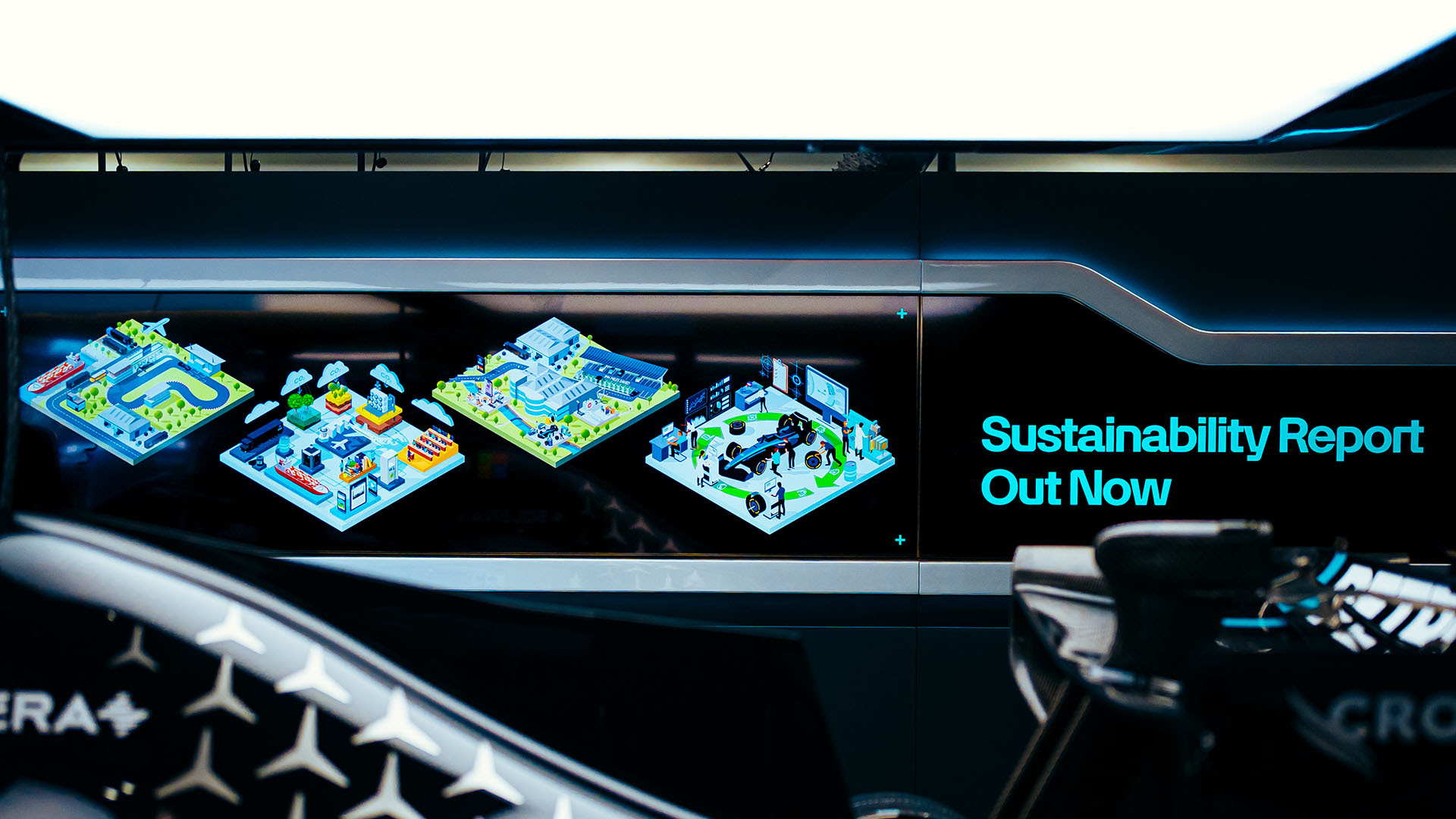
Mercedes-AMG PETRONAS F1 Team Cuts Race Emissions by 54%, Publishes First Net Zero Climate Plan
Brackley, England, June 30, 2026: Mercedes-AMG PETRONAS F1 Team’s 2025 Sustainability Report highlights major emissions reductions, pioneering sustainable technologies, increased diversity, and a roadmap to achieve Net Zero by 2040.
The Mercedes-AMG PETRONAS Formula One Team has released its 2025 Sustainability Report, showcasing significant progress in its ambition to become one of the world’s most sustainable professional sports teams. The report highlights a 54% reduction in Race Team Control emissions compared to its 2022 baseline, alongside groundbreaking innovations in sustainable materials, logistics, and inclusion.
The team also published its first-ever Climate Transition Action Plan (CTAP), outlining a comprehensive roadmap to achieve Net Zero emissions across all scopes by 2040, while demonstrating that business growth can be achieved alongside lower carbon emissions.
Mercedes F1 Reduces Emissions While Growing Its Business
According to the report, the Brackley-based Formula 1 team achieved a 28% reduction in Race Team Control emissions and a 15% reduction in overall emissions during 2025 compared with 2024.
Since 2022, Mercedes has reduced Race Team Control emissions by 54%, largely through the increased use of Sustainable Aviation Fuel certificates (SAFc) and improvements in operational efficiency.
The team estimates that the adoption of SAFc has reduced aviation-related emissions by 30,688 tonnes of CO₂ equivalent (tCO₂e) between 2022 and 2025, including 11,504 tCO₂e during 2025 alone.
Mercedes also reported that 99% of its European race and marketing truck fleet operated using HVO100 renewable diesel, significantly reducing transport emissions.
Formula 1 Firsts in Sustainable Innovation
The 2025 season saw Mercedes introduce several sustainability milestones for Formula 1.
Among the most notable achievements was the first use of a bio-based carbon fibre composite on a technically performance-critical Formula 1 car component. The innovative material incorporates resin derived from bio-diesel by-products while maintaining the strength and performance required for racing.
The team also became the first Formula 1 outfit to deploy the Mercedes-Benz eActros 600 electric truck for race logistics, using the battery-powered vehicle to transport race cars and equipment to a European Grand Prix weekend.
Another industry milestone came with Mercedes becoming the first Formula 1 team to achieve ISCC+ certification for cured carbon fibre composite components.
Diversity and Community Investment Continue to Grow
The report marks the successful completion of the team’s five-year Accelerate 25 inclusion programme.
Key achievements include:
- 37.8% of new hires in 2025 came from under-represented groups, including women and minority ethnic communities.
- Charitable donations since 2020 have now exceeded £500,000.
- The team supported 70 local, national and international charitable causes through corporate donations and community initiatives.
Mercedes also continued its education programmes, supporting scholarships, mentoring, work experience and initiatives designed to improve access to careers in motorsport and engineering.
Sustainable Operations at Brackley
The team’s headquarters in Brackley also continued to improve its environmental performance.
Highlights include:
- 100% renewable electricity sourced through Renewable Energy Guarantees of Origin (REGOs).
- 49% reduction in natural gas consumption since 2022, falling from 1.4 million kWh to 732,000 kWh.
These initiatives form part of Mercedes’ broader strategy to reduce emissions across both race operations and factory activities.
Supplier Standards and Sustainable Motorsport
Mercedes introduced a formal Supplier Code of Conduct, developed with external sustainability experts, to encourage responsible practices throughout its supply chain.
The team also partnered with Motorsport UK to fund sustainable fuel usage in the IAME Waterswift Restricted Cadet Class, supporting young drivers competing in the British Kart Championships while promoting lower-carbon racing technologies.
Nature-Based Carbon Removal Projects
Beyond Formula 1, Mercedes expanded its climate initiatives through investments in carbon removal projects.
The team committed approximately 18,900 tonnes of CO₂ equivalent in carbon removals across nature-based, hybrid and engineered solutions to be delivered between 2024 and 2030.
Working alongside PETRONAS, Mercedes also launched the Blue Carbon Collective, supporting mangrove conservation and restoration research in Malaysia.
Toto Wolff: Sustainability Is Now Part of Performance
Toto Wolff, Co-Owner, Team Principal and CEO of Mercedes-AMG PETRONAS F1 Team, said sustainability has become inseparable from the team’s competitive ambitions.
“Competing in Formula One brings both responsibility and opportunities. In 2025, we made significant investments in new materials, new efficiencies and in scaling new sustainable solutions. While we are driven by performance on track, we’ve seen time and again that our innovations bring benefits far beyond the grid.”
He added that investing in people remains equally important as investing in technology.
“Our ambition is to become one of the most sustainable global professional sports teams and 2025 was the year that sustainability became inseparable from performance.”
Climate Transition Action Plan Targets Net Zero by 2040
Alongside the sustainability report, Mercedes unveiled its first Climate Transition Action Plan, establishing clear emissions reduction targets.
The strategy includes:
- 42% reduction in total emissions by 2030 compared with 2022 levels.
- Race Team Control Net Zero by 2030.
- Net Zero across all emissions scopes by 2040.
- A strategy combining emissions reductions with high-quality carbon removals aligned with the Oxford Offsetting Principles.
- Increased collaboration with suppliers to reduce Scope 3 emissions across the value chain.
The team says the plan is designed not only to reduce its own environmental footprint but also to accelerate sustainable innovation throughout Formula 1 and the wider automotive industry.
Share this content:




Post Comment