
Lenovo Technology Powers Marc Márquez’s Record 102-Point Comeback to 2026 MotoGP Title
Bengaluru, India, November 26, 2026: Lenovo’s high-performance computing technology played a crucial role in Marc Márquez’s remarkable comeback to clinch the 2026 MotoGP Riders’ World Championship, helping Ducati Lenovo Team overcome a record 102-point deficit during the season.
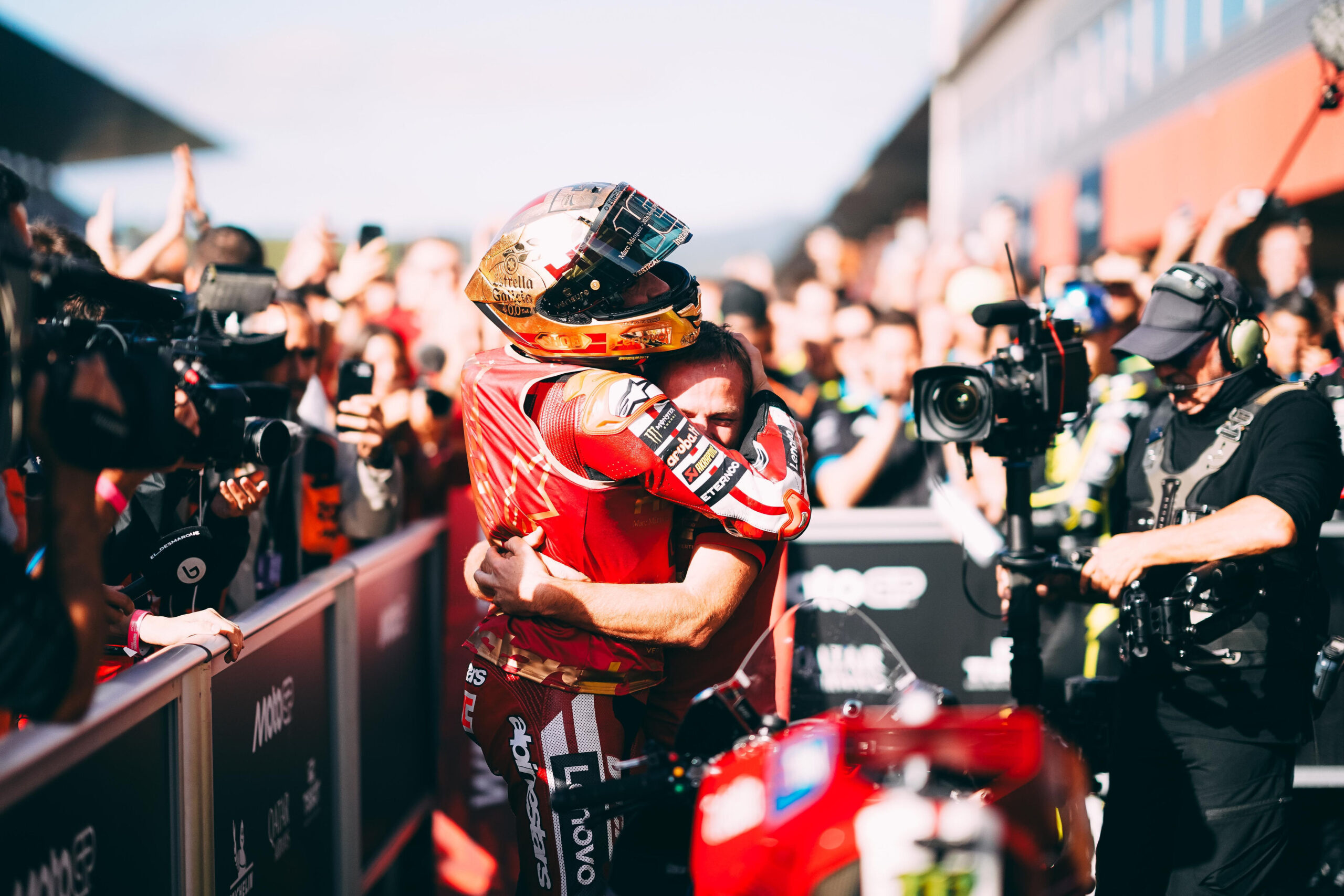
Márquez secured the championship at the Portuguese Grand Prix on November 22, completing one of the greatest comebacks in MotoGP history after injuries had compromised the opening part of his campaign. Lenovo, the team’s title and technology partner, has now revealed how data analysis, simulations and advanced computing infrastructure supported the Spaniard’s championship-winning campaign.
According to Lenovo, Ducati Corse engineers conducted 1,500 simulations specifically for Márquez during the 2026 season, analysing approximately 300GB of data related to his performance, motorcycle behaviour and setup requirements.
The technology infrastructure also enabled engineers to evaluate around 100 motorcycle setup changes across tests and race weekends, while processing approximately 80 hours of track activity. This included telemetry analysis, lap comparisons, video reviews and calculations involving various performance parameters.
The collaboration between Lenovo and Ducati Corse was particularly important in improving the speed and efficiency of engineering decisions. An expanded High-Performance Computing (HPC) infrastructure delivered approximately 48% more processing power and nearly twice the available memory, allowing engineers to process larger volumes of information within shorter timeframes.
In MotoGP, where teams have limited time between practice sessions and qualifying, the ability to analyse data quickly can make a significant difference. Lenovo workstations, edge servers and HPC infrastructure helped Ducati engineers compare telemetry with rider feedback, identify potential improvements and evaluate changes before the motorcycle returned to the track.
The technology also proved valuable during Márquez’s absence following his crash at Le Mans. Through the Ducati Lenovo Remote Garage in Bologna, engineers continued analysing data, conducting simulations and collaborating with the trackside team despite the absence of fresh laps from the Spanish rider.
This ensured that motorcycle development continued while Márquez recovered. Engineers evaluated potential changes while maintaining the characteristics he required from the Desmosedici, particularly in terms of performance, predictability and rider confidence.
Following his return to competition, Ducati Corse used Lenovo-powered analysis to compare Márquez’s pre- and post-injury performances. Key parameters included braking, throttle application, cornering speeds and lean angles. These findings were assessed alongside Márquez’s feedback and comparisons with other Ducati riders.
The ability to simulate potential changes before testing them on track also helped the team reduce the number of laps spent investigating solutions that could be ruled out through computer analysis. This allowed engineers to make faster, more structured decisions and maximise the limited track time available.
Luca Rossi, President of Intelligent Devices Group at Lenovo, said Márquez’s championship victory demonstrated what a strong partnership built on innovation and collaboration could achieve.
He added that Lenovo technology had supported the team’s innovation and performance throughout a challenging season, while also contributing to preparations for a new era of MotoGP.
Ducati Motor Holding CEO Claudio Domenicali said Márquez’s championship success demonstrated the potential of combining technology with human performance. He credited the rider’s determination, engineering excellence and Lenovo’s technological support for helping the team achieve its objectives.
Technology to support Ducati’s 2027 MotoGP project
Beyond the 2026 championship campaign, the data collected throughout the season is also contributing to the development of Ducati’s 2027 Desmosedici GP motorcycle.
Lenovo-powered simulations and data analysis are helping Ducati Corse engineers identify performance characteristics that can work across different riders, circuits and racing conditions. The work is particularly important as the manufacturer prepares for the technical regulation changes coming to MotoGP in 2027.
For Ducati and Lenovo, the partnership has therefore delivered benefits beyond Márquez’s championship-winning comeback. The computing infrastructure that helped the Spaniard recover lost ground and fight for the title is also supporting the next phase of the manufacturer’s MotoGP development programme.
Share this content:





Post Comment