McLaren Targets Red Bull in Qatar GP as Constructors’ Championship Battle Intensifies
Lusail, Qatar, November 26, 2026: McLaren Mastercard Formula 1 Team heads into the 2026 Qatar Grand Prix looking to close the gap to Red Bull in the battle for third place in the Constructors’ Championship, with the penultimate round of the season offering another opportunity to collect crucial points.
The race at the Lusail International Circuit forms the middle leg of the final triple-header of the 2026 FIA Formula One World Championship, following the Las Vegas Grand Prix and preceding the season finale in Abu Dhabi.
McLaren has carried significant momentum into the closing stages of the campaign. Following Lando Norris’ commanding pole-to-flag victory at the São Paulo Grand Prix, the team arrived in Las Vegas trailing Red Bull by 17 points. A strong double-podium finish in Sin City helped reduce the deficit to just nine points, setting up an intense battle over the final two rounds.
With a maximum of 86 points still available across the Qatar and Abu Dhabi Grands Prix, McLaren will be looking to extract the maximum performance from its MCL40 and finish the season strongly.
Lusail presents a demanding technical challenge
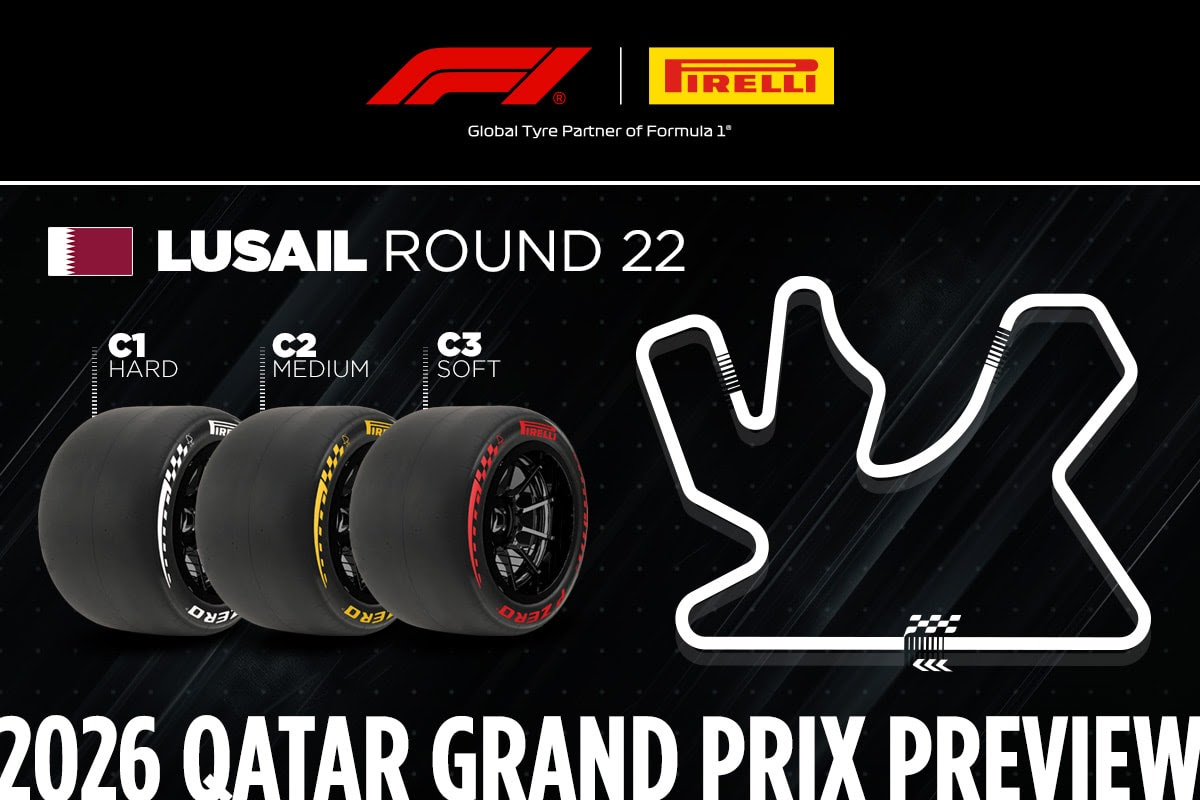
The 5.419km Lusail International Circuit features 16 corners, comprising 10 right-handers and six left-handers. Originally designed for motorcycle racing, the circuit is characterised by a long start-finish straight followed by a sequence of flowing medium- and high-speed corners.
The layout places considerable energy through the tyres, particularly the left-hand side through the extended Turn 12 to Turn 15 sequence. Pirelli has therefore selected its three hardest compounds for the weekend: C1 Hard, C2 Medium and C3 Soft.
Tyre management will be particularly important, with Pirelli imposing a maximum stint length of 27 laps per set, two laps more than the 2025 limit. The increase has been made possible by the lower aerodynamic loads of the 2026 cars and a reinforced tyre construction.
The 57-lap Grand Prix will require teams to plan their strategies around the mandatory stint limits, with at least three stints and four competitive pit stops expected to shape the race.
Racing under floodlights adds another dimension to the challenge. Free Practice 2 and Qualifying will take place after dark in conditions closer to those expected during the race. Teams will need to account for changing temperatures and their impact on tyre performance.
Qualifying is also expected to be particularly important, given the circuit’s flowing layout and limited heavy braking zones. The main straight provides the primary overtaking opportunity into Turn 1, making track position a significant factor.
McLaren prepares for tyre and energy management challenges
Adrian Goodwin, Associate Director of Car Race Engineering at McLaren, expects another closely contested weekend at Lusail, highlighting the importance of qualifying performance, tyre management and energy deployment under the 2026 power unit regulations.
Goodwin explained that the circuit’s high-speed corners present a particular challenge when managing battery energy, especially with potentially variable wind conditions affecting the cars.
He also pointed to the importance of track limits and kerb usage during qualifying, where small mistakes could prove costly given the expected tight margins between teams.
On tyre management, Goodwin said McLaren had developed a strong understanding of the harder compound allocation through previous races at Silverstone and Suzuka.
He noted that the lower cornering speeds of the 2026 cars, combined with ambient temperatures expected to be around 23–25°C, should make the tyre demands less severe than in previous editions.
The 27-lap maximum stint length will also influence race strategy. Rather than focusing solely on extending tyre life in a conventional one-stop strategy, teams will need to identify the best combination of three stints and decide which compounds to retain for the Grand Prix.
Goodwin added that the fixed stint lengths simplify some aspects of tyre management, although teams must avoid making their first pit stop too early and inadvertently committing themselves to a three-stop strategy.
Final push for Constructors’ Championship points
Beyond the technical challenges, McLaren must also manage the physical demands of the final triple-header. The transition from Las Vegas to Qatar involves an 11-hour time-zone shift, making fatigue management an important consideration for drivers and team personnel.
With just two races remaining, McLaren’s priority will be to deliver clean, consistent weekends and maximise the potential of the MCL40.
The nine-point gap to Red Bull means the battle for third place in the Constructors’ Championship remains finely balanced. Strong performances in Qatar and Abu Dhabi could prove decisive as McLaren looks to end the 2026 season on a high.
Share this content:






Post Comment