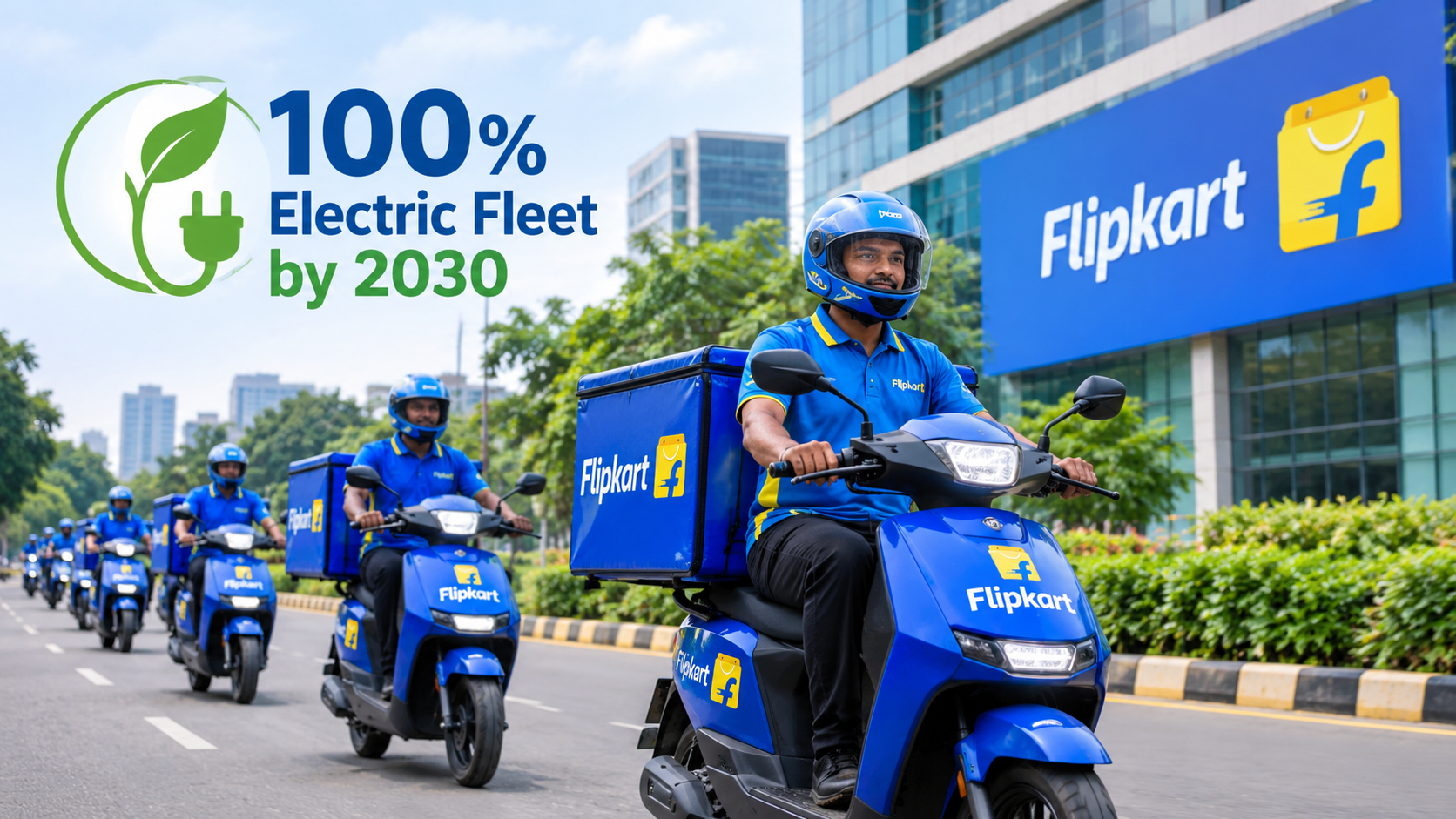
Flipkart Doubles Last-Mile EV Fleet to 42,000 During Festive Season
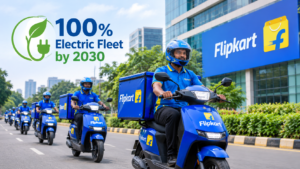
Bengaluru, India, November 23, 2026: Flipkart has doubled its last-mile electric vehicle (EV) fleet to 42,000 during the 2026 festive season, up from more than 20,000 in 2025, as the Indian e-commerce company accelerates its transition towards sustainable deliveries. The expansion is part of Flipkart’s commitment to achieve a 100% electric last-mile delivery fleet by 2030 under the Climate Group’s EV100 initiative.
The company’s growing EV fleet reflects the increasing adoption of electric two-wheelers across its delivery operations, particularly in the quick commerce segment. Electric two-wheelers deployed for Flipkart Minutes account for approximately 77% of the total fleet, while another 20% operate across the company’s wider delivery network.
The largest fleet expansions have been recorded in Bengaluru, Mumbai, Chennai, Pune and Gurugram, highlighting the growing role of electric mobility in India’s urban delivery ecosystem.
Flipkart survey highlights factors driving EV adoption
To understand the factors influencing the transition to electric mobility, Flipkart conducted a survey covering more than 9,400 delivery partners, known as Wishmasters, including both EV and internal combustion engine (ICE) vehicle users.
The findings indicate that delivery partners who have experienced riding an electric vehicle are nearly four times more likely to consider switching to an EV than those who have not tried one.
Among existing EV riders, 59% identified cost savings as a key motivation for adopting electric two-wheelers. However, access to charging infrastructure remains an important operational requirement.
For delivery partners currently using ICE vehicles, financial assistance emerged as a major factor influencing their willingness to switch. Around 55% said support through EMI loans, down-payment assistance or daily EMI payment options would encourage them to adopt electric vehicles.
The survey also highlighted the importance of awareness about government incentives. Awareness of available incentives was higher among EV riders at 58%, compared with 37% among non-EV users, indicating the need for greater education and outreach to encourage adoption.
EV Assist and financing support for delivery partners
Flipkart is working to address these challenges through training programmes, awareness campaigns, nationwide EV roadshows and digital learning initiatives that provide delivery partners with information about government incentives and available financing options.
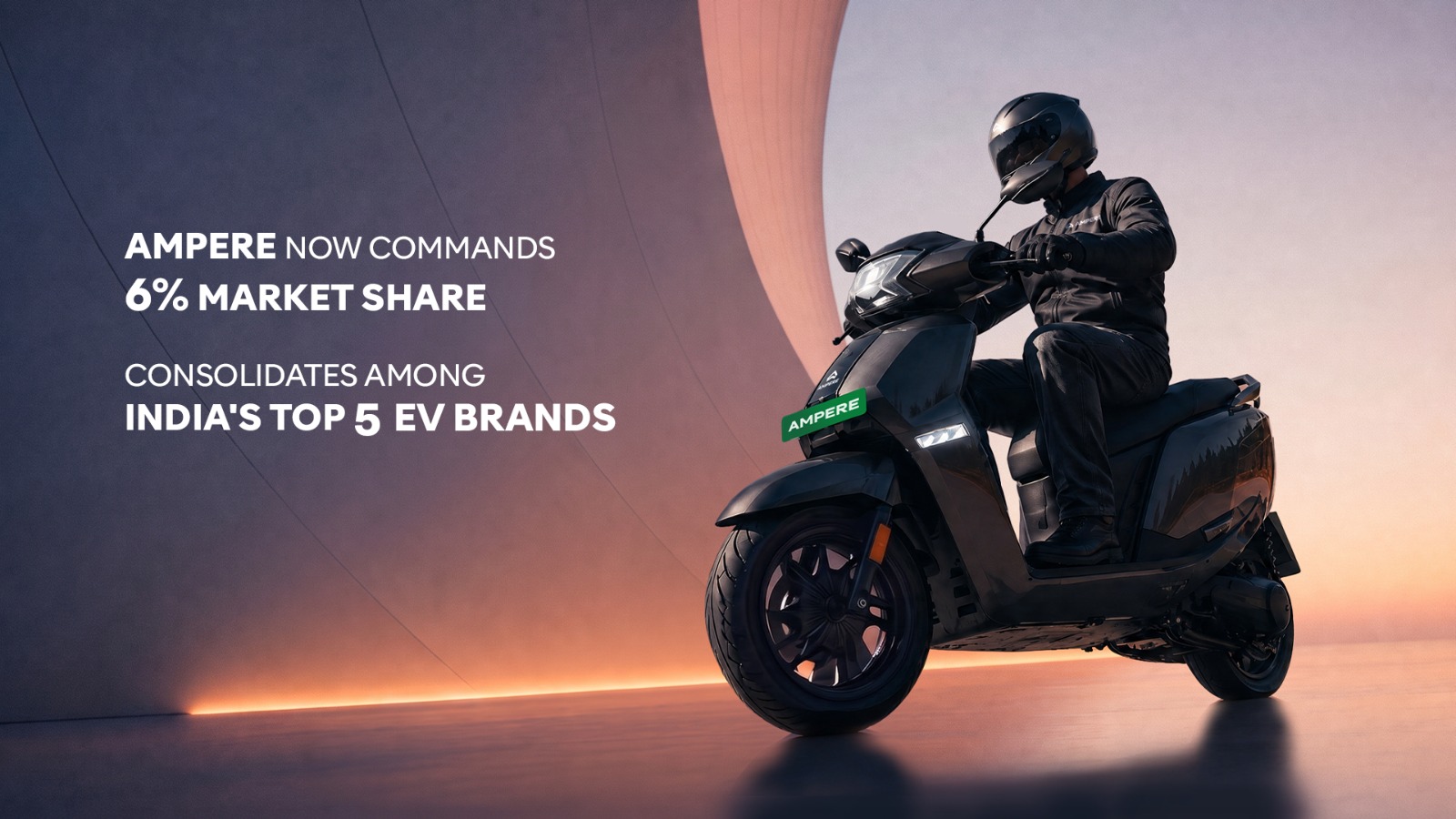
The company recently organised an EV Mela in Bengaluru, bringing together electric two-wheeler manufacturers including Ampere, Bajaj, Hero Vida and Motovolt, alongside financing institutions. The initiative provided Wishmasters with an opportunity to explore electric vehicle options and understand the financial support available for making the transition.
Another initiative is EV Assist, launched earlier in 2026, which connects delivery partners with electric two-wheeler rental providers. The programme allows Wishmasters to adopt electric mobility without having to purchase a vehicle upfront.
EV Assist has witnessed strong demand in Delhi NCR, Patna and Bengaluru, offering an alternative for delivery partners who may face financial constraints in purchasing an electric vehicle.
Flipkart expands EV charging and battery-swapping infrastructure
Alongside vehicle deployment, Flipkart is also focusing on improving charging accessibility for its delivery partners. The company is working with YUMA, one of India’s largest battery-swapping companies, and other ecosystem partners to strengthen charging infrastructure across its delivery hubs and micro-fulfilment centres.
As part of this effort, eight battery-swapping stations are currently operational in Bengaluru, with plans to extend the network to other metropolitan cities.
Commenting on the expansion, Rajneesh Kumar, Chief Corporate Affairs Officer, Flipkart Group, said that the decision to adopt electric vehicles ultimately depends on the practical considerations of delivery partners, particularly vehicle costs, charging access and financing.
“Our delivery partners decide whether electric works, and they tell us it comes down to cost, charging and financing. A rider who has tried an EV is nearly four times more likely to switch, so our job is to make that first try easy. Doubling our fleet this festive season shows riders are ready when the switch is practical, and we will keep building this with our Wishmasters and partners,” Kumar said.
With its last-mile EV fleet now reaching 42,000 vehicles, Flipkart is strengthening its efforts to reduce the environmental impact of its delivery operations. The company’s focus on affordable vehicle access, financing support, rider education and battery-swapping infrastructure will be central to its ambition of achieving a fully electric last-mile delivery fleet by 2030.
Share this content:




Post Comment