F1 Las Vegas Grand Prix 2026: Tyre Management and Warm-Up Key Challenges for Teams
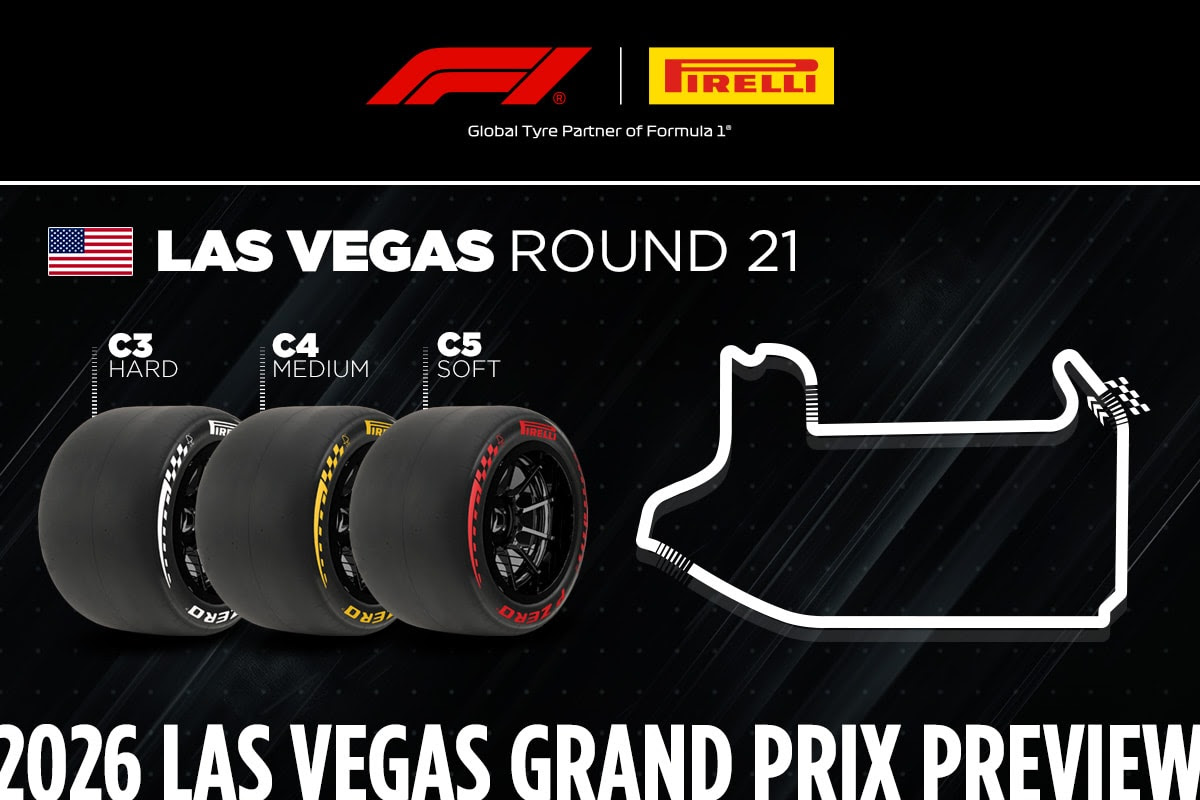
Las Vegas, United States, November 18, 2026: Formula 1 heads to the Las Vegas Strip Circuit for the third-to-last round of the 2026 season, with tyre management expected to play a crucial role in determining the outcome of the Grand Prix.
The 6.201-kilometre street circuit in Nevada features three long straights and 17 corners, presenting teams with a distinctive set of technical challenges. Unlike several other venues on the calendar, the Las Vegas Grand Prix is held in unusually cold conditions, with air temperatures expected to range between 10°C and 15°C.
The weekend follows the event’s traditional schedule, with the first two free practice sessions taking place on Thursday, followed by FP3 and qualifying on Friday. The race is scheduled to start at 20:00 local time on Saturday.
Low Temperatures and Tyre Warm-Up a Major Challenge
Keeping tyres within their optimal operating window will be one of the biggest challenges for teams and drivers. The circuit’s long full-throttle sections reduce the energy transferred to the tyres, making it difficult to generate and maintain sufficient temperature.
This could be particularly important during qualifying, when drivers need to extract maximum performance over a single flying lap. With grip levels already expected to be limited, tyre preparation could become more important than at conventional circuits.
Some teams could consider consecutive preparation laps and timed runs, reducing the number of cooling laps to preserve tyre temperatures before attempting a qualifying lap.
Grip levels will also be affected by the circuit’s temporary street layout. Since the track is reopened to public traffic every day, dust and sand accumulate on the asphalt, making grip evolution difficult to predict throughout the weekend.
Only minor resurfacing work has been carried out ahead of this year’s event, with repairs completed at the entry to Turn 13 and along the right-hand side of the stretch leading to Turn 14.
Graining and Brake Lock-Ups Among Other Concerns
Although tyre loads are not particularly high across most of the circuit, the middle sector features several high-speed corners that place greater demands on the tyres.
Graining could again become an issue, given the combination of low grip levels and cold temperatures. As witnessed in previous editions of the Las Vegas Grand Prix, any resulting degradation is likely to be primarily mechanical in nature.
Brake lock-ups are another factor teams will need to monitor. The circuit’s long straights lead into demanding braking zones, increasing the possibility of front-tyre lock-ups and flat spots.
Drivers will need to manage their braking carefully to avoid damaging their tyres, particularly during qualifying and the race, when a flat spot could compromise performance over subsequent laps.
One-Stop Strategy Expected to Be Fastest
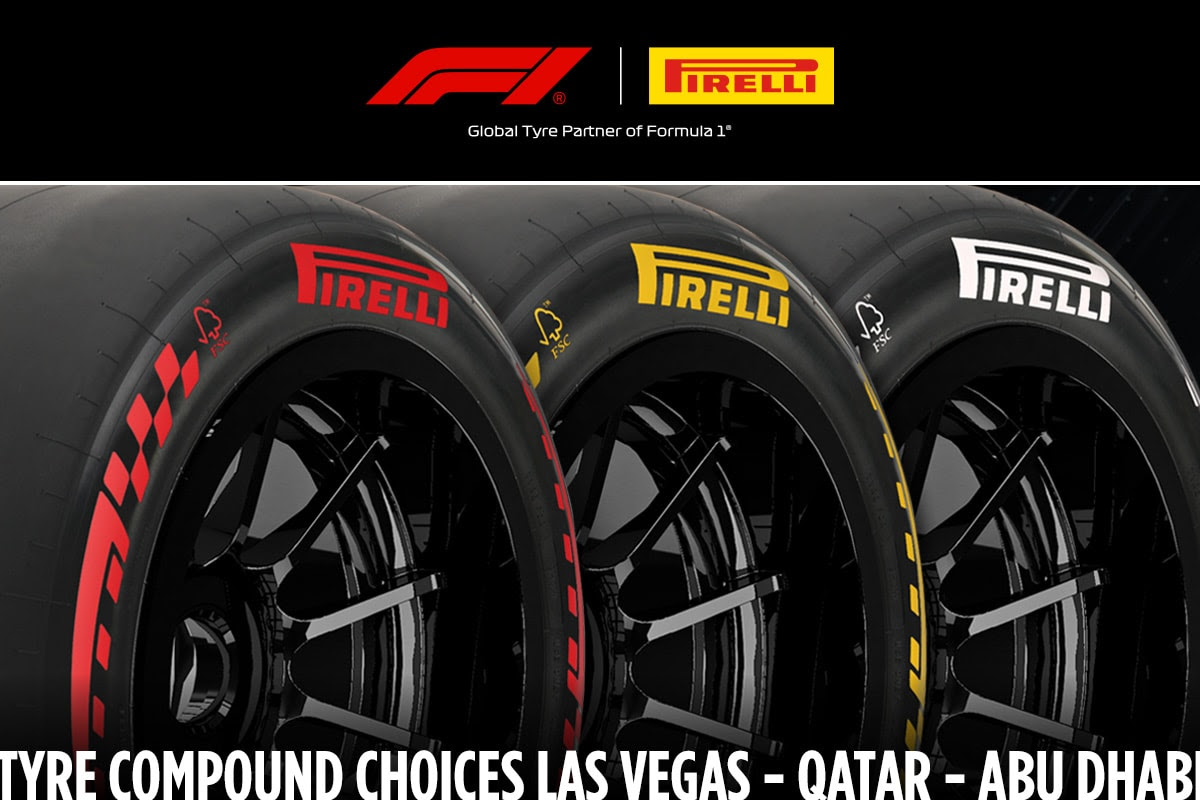
On paper, a one-stop strategy is expected to be the quickest approach for the 2026 Las Vegas Grand Prix, with all three available tyre compounds potentially playing a role.
Even the C5 compound, which has demonstrated good versatility in its current specification, could be considered a viable option for a race stint.
The characteristics of the Las Vegas Strip Circuit also make the traditional undercut strategy less effective. Following a pit stop, tyres can lose temperature quickly along the long section between pit exit and the more demanding parts of the lap. This reduces the immediate performance advantage usually associated with fitting fresh tyres.
Weather conditions could also influence tyre selection. Last year’s qualifying session was affected by rain, resulting in extensive use of wet-weather tyres.
If similar conditions return this weekend, the Full Wet tyre could prove particularly effective. The low temperatures and circuit layout favour a tyre with a deeper tread pattern, which can generate and retain temperature more effectively than the Intermediate.
What Happened at the 2025 Las Vegas Grand Prix?
The 2025 Las Vegas Grand Prix was largely a one-stop race, with the Medium and Hard compounds sharing the race distance.
All three podium finishers started on the yellow-marked Medium tyres before switching to the C3 compound for the remainder of the race.
Kimi Antonelli was the only driver to start on the Soft compound, switching to Hard tyres as early as lap two.
With similarly challenging environmental conditions expected in 2026, tyre warm-up, mechanical graining and strategic flexibility could once again shape the outcome of the Las Vegas Grand Prix.
Share this content:







Post Comment