Mozilla Report Alleges Microsoft Still Uses Edge to Steer Browser Choice in India
San Francisco, USA, July 15, 2026: Mozilla has released a new report alleging that Microsoft continues to use design practices across Windows, Edge, Bing and Copilot that make it harder for users to choose browsers other than Microsoft Edge. The report, titled “Over The Edge 2.0,” claims these practices remain prevalent in markets including India, while users in Europe benefit from stronger protections under the European Union’s Digital Markets Act.
Conducted by deceptive design experts Dr. Harry Brignull and Cennydd Bowles, the study revisits Microsoft’s browser choice experience two years after the original Over The Edge report. According to Mozilla, the researchers found that many of the same issues persist across Windows 10 and Windows 11, despite regulatory changes in Europe.
Microsoft Edge Still Favoured Over Alternative Browsers
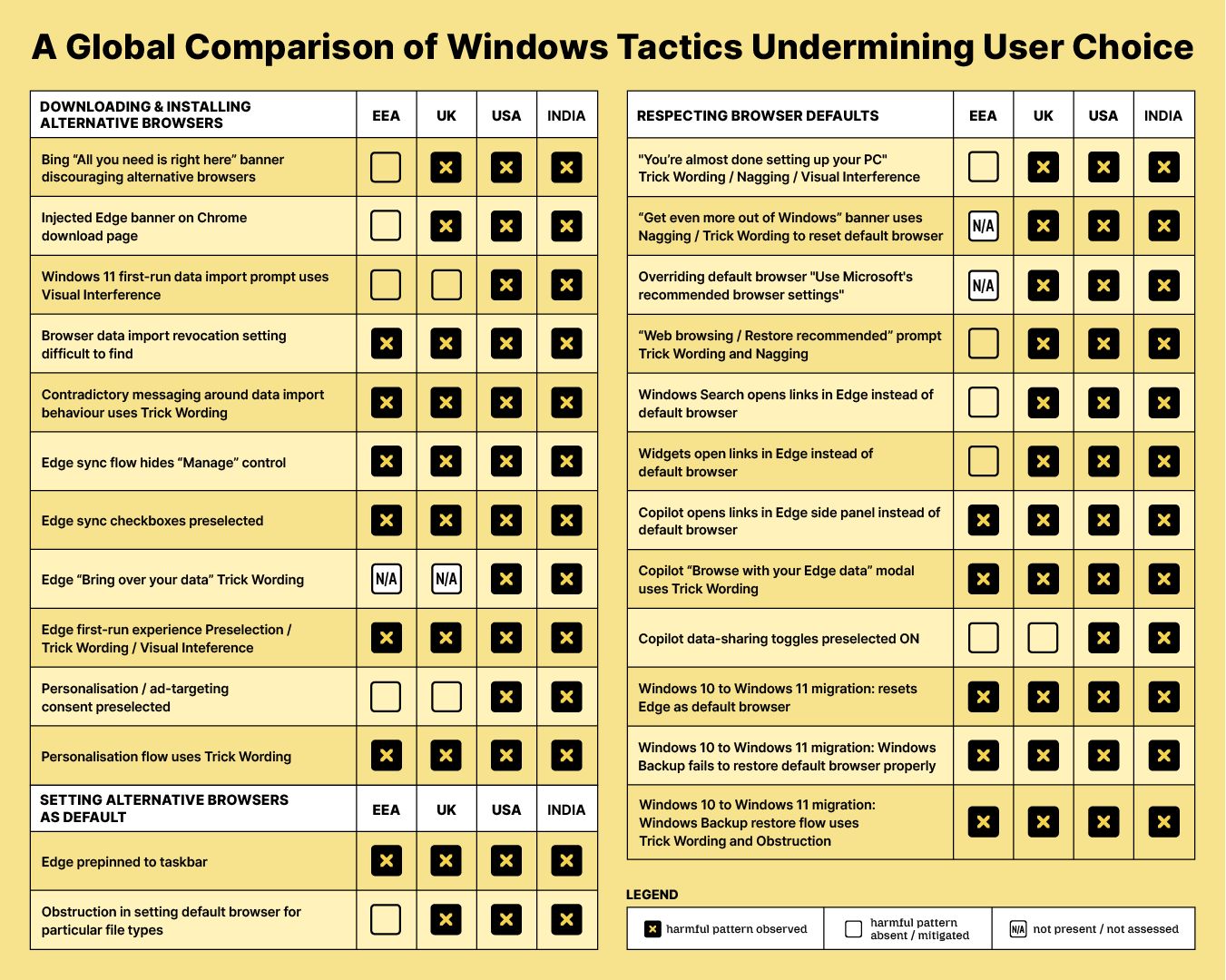
The report highlights several practices that Mozilla says continue to influence browser choice outside the European Economic Area (EEA). These include Windows Search and Widgets opening links in Microsoft Edge even when another browser has been selected as the default.
Researchers also found that Microsoft Edge continues to display promotional banners when users visit Google’s Chrome download page and that Windows Backup does not consistently preserve browser preferences when users migrate from Windows 10 to Windows 11.
Mozilla further claims that Copilot, Microsoft’s AI-powered assistant, opens web links within an Edge-rendered side panel regardless of a user’s chosen default browser, raising fresh concerns about browser neutrality in the AI era.
Europe Sees Fairer Browser Choice Experience
The report compares browser choice experiences across India, the United States, the United Kingdom and Germany, representing the EEA. According to Mozilla, Microsoft’s implementation differs significantly across regions.
Researchers found that regulatory obligations under the Digital Markets Act (DMA) have prompted Microsoft to remove several browser choice barriers in Europe. While some issues remain, Mozilla says the EEA now offers a noticeably fairer experience than markets such as India, Brazil and the United States, where most of the documented design patterns continue to exist.
Mozilla argues that these differences demonstrate Microsoft is capable of providing a better browser choice experience globally rather than limiting such changes to jurisdictions with stricter regulations.
India Remains a Key Focus
Mozilla noted that India is one of Microsoft’s largest Windows markets, with around 43% of Windows users still running Windows 10 during the first quarter of 2026, the highest proportion among the regions included in the study.
The report says preserving browser preferences during upgrades remains particularly important for Indian users as the country considers its own digital market regulations, including possible ex-ante obligations for large technology platforms.
Mozilla Calls for Global Changes
Commenting on the report, Kush Amlani, Global Competition and Regulatory Lead at Mozilla, said Microsoft has demonstrated it can respect user choice when regulations require it.
Mozilla is urging Microsoft to extend the browser choice improvements already available in Europe to users worldwide rather than relying solely on regulatory intervention.
The report concludes that as AI-powered services become increasingly integrated into desktop operating systems, ensuring users retain genuine choice over browsers and online services will become even more important in shaping the future of the web.
Share this content:









Post Comment