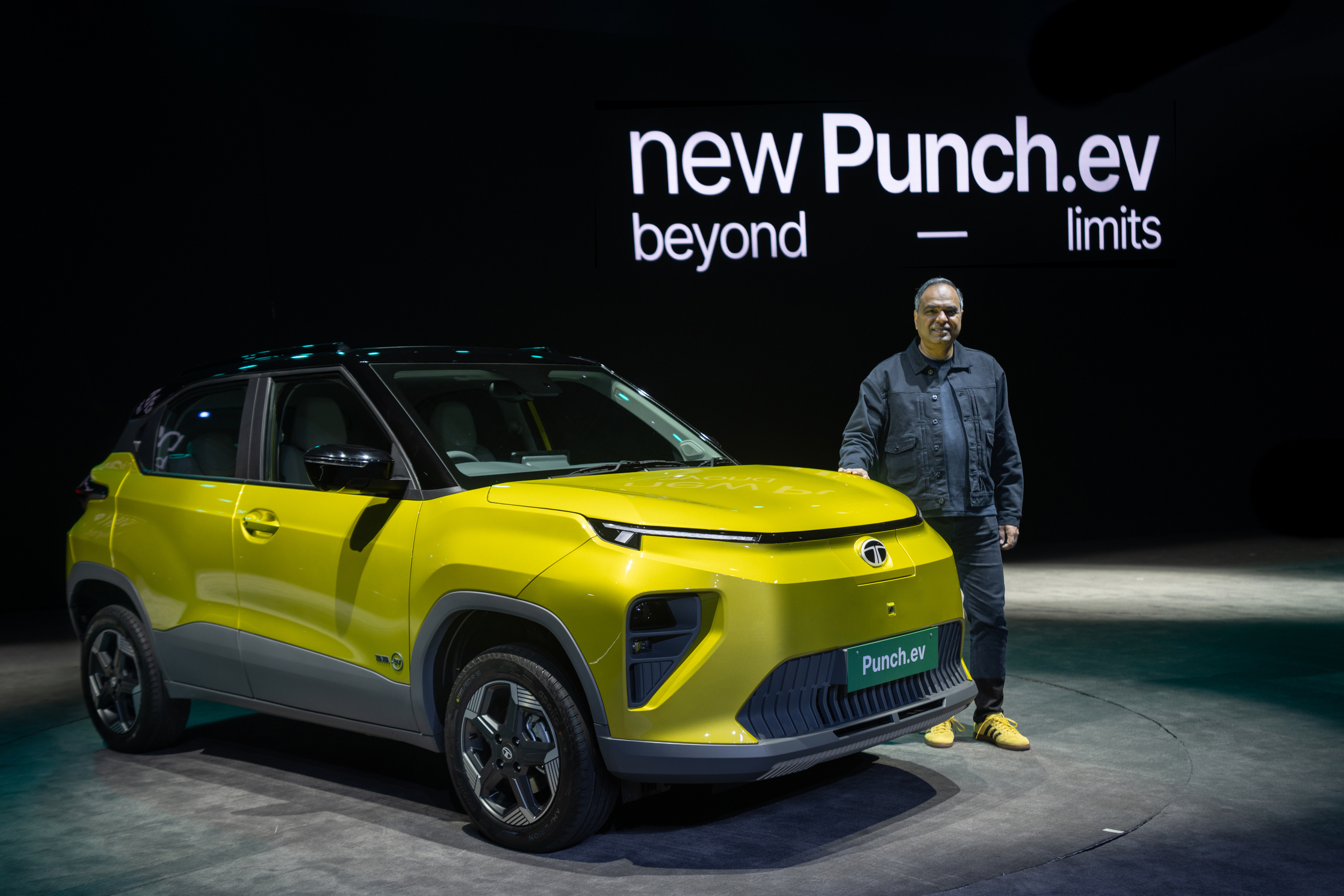
TATA.ev Launches New Punch.ev at ₹9.69 Lakh, Targets Mass EV Adoption in India
Mumbai, February 20, 2026: In a major push to accelerate electric vehicle adoption in India, Tata Passenger Electric Mobility Ltd., operating under the brand TATA.ev, has unveiled the new avatar of the Punch.ev at an introductory price of ₹9.69 lakh (ex-showroom, Mumbai).
Positioned to democratize entry-level electric mobility, the new Punch.ev aims to bring EV ownership close to on-road price parity with internal combustion engine (ICE) vehicles in the small car segment. The launch marks a significant milestone in India’s fast-evolving EV landscape, addressing key barriers such as affordability, range anxiety, charging access, and battery longevity.
Affordable EV Ownership with Flexible BaaS Option
In addition to its competitive sticker price, TATA.ev is offering a Battery-as-a-Service (BaaS) option starting at ₹6.49 lakh, with a battery EMI of ₹2.6 per km. This alternative ownership model lowers the upfront cost of buying an electric car, making it more accessible for first-time EV buyers and households transitioning from petrol or diesel vehicles.
Speaking at the launch, Shailesh Chandra, Managing Director of Tata Motors Passenger Vehicle Ltd. and Tata Passenger Electric Mobility Ltd., said the new Punch.ev makes electric mobility “truly accessible, practical and worry-free for every household,” adding that it resolves the core concerns that have historically limited entry-level EV adoption.
Built on acti.ev Architecture: Beyond Limits
Developed on Tata’s advanced acti.ev architecture, the new Punch.ev builds on the strong brand equity of the Punch SUV, which pioneered the subcompact SUV category in India. In its electric avatar, the model aims to appeal to a broad spectrum of buyers seeking a reliable city car capable of handling occasional long-distance drives.
Longer Real-World Range, Bigger Battery Options
The new Punch.ev is powered by a larger 40 kWh LFP prismatic cell battery pack, delivering a real-world C75 range of approximately 355 km and an ARAI-certified (P1+P2) range of 468 km. This extended range significantly reduces charging frequency for daily urban commutes and short intercity travel.
Additionally, Tata is offering a 30 kWh battery pack option, giving customers flexibility based on driving needs and budget. Together, the two battery choices enable a seamless shift from ICE vehicles to EVs while offering lower running and maintenance costs.
Fast Charging: 20% to 80% in 26 Minutes
Addressing charging convenience, the Punch.ev supports fast charging, enabling a 20% to 80% charge in just 26 minutes. In practical terms, it can add up to 135 km of real-world range in just 15 minutes—ideal for quick stops during highway journeys.
Lifetime HV Battery Warranty
One of the standout features of the new Punch.ev is its Lifetime High-Voltage (HV) Battery Warranty with unlimited kilometres. This comprehensive coverage on the most critical EV component is expected to boost consumer confidence, particularly among first-time electric car buyers concerned about battery degradation and replacement costs.
Expanding Nationwide Charging Ecosystem
TATA.ev’s growing charging ecosystem further strengthens the ownership proposition. The network now spans over 2.3 lakh charging points across 1,500 cities, including home, community, and public charging solutions.
The company has aggregated more than 30,000 public chargers in collaboration with 30+ charge point operators. Through the IRA.ev app, customers can check real-time charger availability, navigate to stations, and make seamless digital payments.
TATA.ev also curates a “.ev Verified” network comprising 2,500+ fast and reliable chargers across 500 cities and towns. On highways, the company has established India’s largest superfast charging network, with over 450 charging points across 130+ Mega Charging Hubs on 80 highways. This network is set to expand to 800 charging points by FY26.
Share this content:







Post Comment